

Why Your Product Photos Are Losing You Sales (And How to Fix It)

Why Your Product Photos Are Losing You Sales (And How to Fix It)
You have traffic. People are visiting your store. They are looking at your products.
And then they leave.
Most store owners spend months trying to fix this. They test new prices, rewrite product descriptions, run discount campaigns. Some results improve. The core problem stays the same.
In most cases, the real reason people leave without buying is not the price and not the description.
It is the photos.
The Connection Between Visual Quality and Purchase Decisions
When someone shops online, they cannot touch the product. They cannot pick it up, feel the texture, or examine it closely. All they have is what they can see on the screen.
Your photos are not decoration. They are your sales floor, your display window, and your customer service team — all at once.
When those photos look flat, poorly lit, or inconsistent, the customer draws a conclusion instantly: this brand does not take itself seriously. If they do not take their presentation seriously, why would I trust their product?
That conclusion happens in seconds. Often before they have read a single word on the page.
Why This Problem Is More Common Than You Think
Most business owners know their photos could be better. Very few understand how directly that gap is costing them money.
The average ecommerce conversion rate sits between 1% and 4%. Brands with high-quality, consistent product visuals consistently sit at the top of that range or above it. Brands with poor visuals sit at the bottom — or below.
The difference is not the product. It is what the product looks like on the page.
This problem is especially common in three situations:
You photographed the products yourself at launch. The photos were good enough to get started. Now the brand has grown but the visuals have not kept up with it.
You hired a photographer once and used those images for everything. The photos are dated, inconsistent, or were not produced with advertising in mind.
You have a growing product line but no scalable way to produce new visuals. New products launch with rushed photos or none at all.
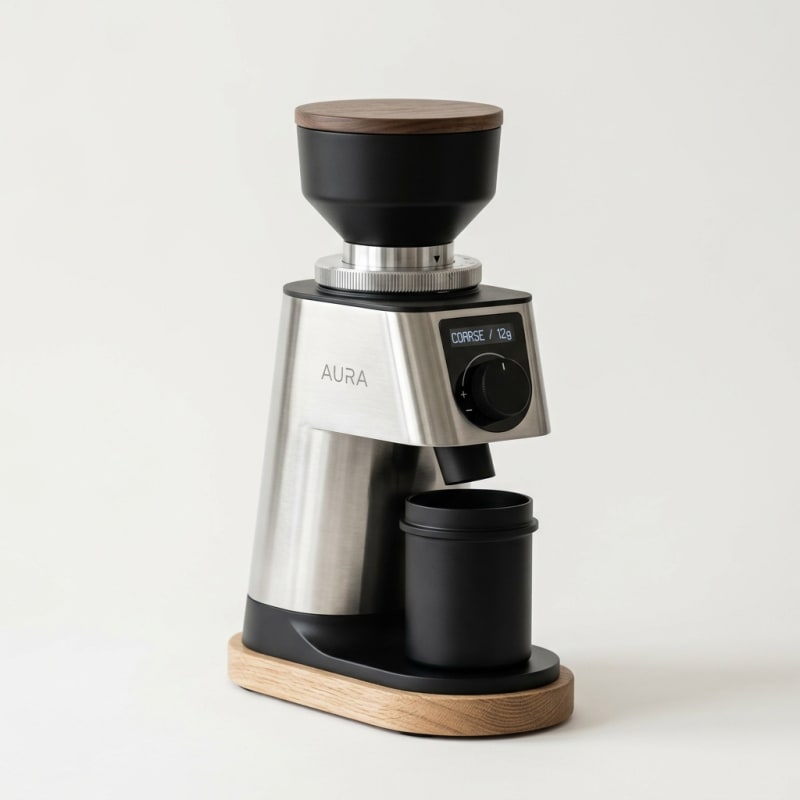
What Poor Product Photos Actually Look Like
It is not always obvious when product photos are hurting you. The problems are not always dramatic. Often they are subtle.
Signs that your product visuals may be costing you sales:
- Inconsistent lighting across your product range. Some products look warm, others cold, others flat. The store feels unfinished.
- Low resolution or blurry details. Customers cannot zoom in and see the quality they are being asked to pay for.
- Unnatural or distracting backgrounds. A messy surface, an off-white background that looks grey, props that compete with the product.
- No lifestyle or context shots. The customer cannot imagine the product in their life because they have never seen it in a real setting.
- Photos that do not match your price point. A premium product photographed like a clearance item sends the wrong message instantly.
Traditional Solutions and Why They Fall Short
The obvious answer is to hire a photographer and do a proper shoot. That works, and it produces results — but it has real limitations for most growing brands.
Cost: A professional product photography shoot with editing can cost several hundred to a few thousand dollars depending on the scope. For a brand with 20 SKUs and seasonal content needs, that adds up quickly.
Time: From booking to final delivery, most shoots take two to four weeks. If you are launching a product or running a time-sensitive campaign, that timeline often does not work.
Scalability: Every new product, every new campaign, every seasonal refresh requires a new shoot. The content machine never stops — but the production budget cannot always keep up.
Consistency: Even with the same photographer, lighting and styling vary between shoots. Maintaining a perfectly consistent look across an entire product catalogue is difficult and expensive to do with traditional photography.
A Practical Alternative for Growing Brands
In recent years, a different production method has become available to product brands — one that produces professional-quality visuals without the cost and logistics of a traditional shoot.
The approach works like this: you provide clear photos of your product on a plain background, taken with any camera or phone. A professional visual is then built around that product — with accurate lighting, a styled environment, proper shadows, and a composition tailored to your brand and your intended use.
The result looks like a studio product shot. The production process does not require one.
This is not a filter or an automatic edit. It is a craft-level production process that happens to use different tools. The quality benchmark is the same: does this image make the product look as good as it deserves to look?
For brands that need consistent, professional-grade visuals across a growing product line — and cannot sustain a traditional photography schedule — this approach solves the problem directly.
What Changes When Your Visuals Are Right
The difference that professional product visuals make is not just aesthetic.
Conversion rates increase. When customers can see the product clearly, confidently, and in context — they buy more.
Return rates decrease. Better photos set accurate expectations. Customers know what they are getting, which means fewer surprises and fewer returns.
Ad performance improves. Meta and TikTok ads live and die on creative quality. The same product with better visuals will outperform consistently.
Brand perception shifts. Premium visuals signal a premium brand. That perception allows you to hold your price and attract the right customers.
Limitations to Be Aware Of
This approach works well for most product categories — including beauty, food, fashion, homeware, accessories, and consumer goods. There are a few situations where it is worth thinking carefully.
If your product sells primarily on texture, material feel, or tactile quality, high-detail physical photography may still be valuable for specific close-up shots — even if broader product and lifestyle images are produced differently.
If your brand does not yet have a defined visual identity, the production process will involve more iteration to find the right aesthetic direction. That is not a barrier, but it is worth knowing upfront.
FAQ
Conclusion
Your product is not the problem. Your price is probably not the problem. Your photos might be.
The good news is that this is one of the most fixable problems in ecommerce — and fixing it has a direct, measurable effect on revenue.
If your store has traffic but is not converting the way it should, start with the visuals. It is almost always the right place to start.
Ready to Fix Your Product Visuals?
See examples of what's possible for your brand →
Or explore:
Ready to Elevate Your Brand's Visuals?
Stop losing sales to poor product photography. Let's create stunning, high-converting AI visuals for your next campaign.